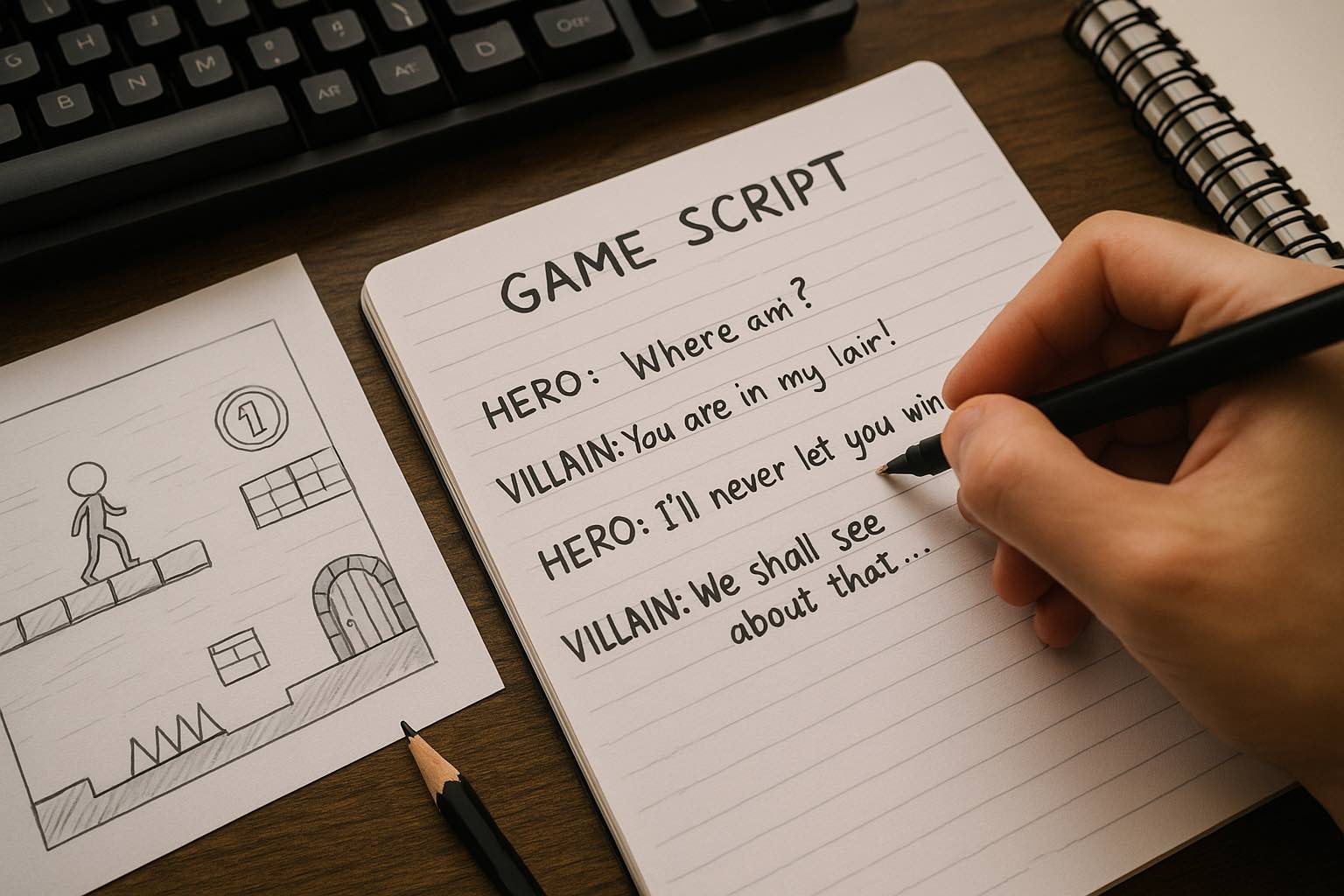
When a game unfolds in a straight line, writers can control the rhythm, the reveals, and the payoffs. Live experiences play by different rules mostly. The story must revolve around real people who talk back, who join and leave mid scene, and who shape the mood in a moment. This shift matters because more players are choosing experiences that feel present and social. For writers, it means trading a single, fixed script for a playbook that can pivot fast, hold attention in bursts, and still feel coherent.It is also timely. Real-time play keeps growing and is reaching wider audiences. Good writers are being asked to create dialogue and beats that travel across video, chat, and UI hints, and that remain clear even with noisy connections or mixed device setups. In practice, that looks less like a screenplay and more like a stack of modular cues, contingency lines, and soft goals that can tolerate surprise. The craft becomes part dramaturgy, part broadcast producing, part community care. In short, the work is not only about what to say, but when to say it, how to say it on camera, and how to fold player feedback back into the moment without breaking the flow.
Writing for live games on casino platforms
Writing for live dealer casino tables centers on performance plus interaction. Scripts are built around dealers who host the table, guide the pace, and keep the room welcoming. The dealer voice has a few jobs at once: set the tone, explain what happens next, and respond to chat in real time. Clear, short lines matter because many players are on mobile, with varied audio conditions and different levels of attention. For that reason, writers often favor tight sentences, a neutral but warm register, and repeated micro signposts that anchor each round: “Bets open,” “Last call,” “Cards down,” “Results coming up.”
Keeping the human voice clear and responsive
Human presence is the anchor. Dealers build confidence through consistent greeting rituals, name use when appropriate, and calm, upbeat reactions to results. Writers provide a voice kit that covers greetings for different join moments, inclusive reactions to outcomes, and prompts that invite short chat replies.They also mark points where the host can acknowledge chat without delaying the next round. Since chat scrolls fast, prompts need to be easy to parse. “First time here, yes or no?” is often more effective than an open question. Experienced teams on the best live casino platforms treat these lines as living assets: they review chat logs, track which prompts spark replies, and refresh the kit often to keep sessions feeling fresh while staying simple and fair.Finally, online communication brings friction. Latency can throw off call and response timing, and mixed microphones can muddy speech. Writers plan for it. They avoid tongue twisters, put key info early in the sentence, and choose words that survive compression. The result is a performance script that reads clean, carries across devices, and leaves room for players to shape the energy in the moment.Of course, another aspect not to miss out on is how gaming platforms write creative ads for their social media channels. As this is a whole other topic, for now, it’s enough to just take a look at one example below, paying attention to how the clip was edited and what language is used in it.
https://www.instagram.com/reel/DSBxV-ij8B-/?igsh=MW03YnNyNmV2a3o4eg%3D%3D
Writing for story games is a different craft
Story games ask writers to pre-build possibilities. Instead of a single performance script, teams design a web of scenes, state checks, and choice gates that still read as one voice. A useful starting point is to think in terms of mechanics, dynamics, and aesthetics, then map how a choice mechanic might drive player behavior and the feeling that follows. This helps writers judge where to put branches, where to fold them back, and what states must persist across chapters. Branching is only one tool. Narrative designers also use quality based systems that unlock content based on tracked traits rather than explicit menu branches. This approach reduces content explosion, keeps reactivity high, and supports strong pacing. It pairs well with salience rules that decide which line should fire when many are eligible. Writers then maintain a small set of reusable beats, like reveal, reflection, and next step, that can be stitched together in many paths without breaking tone.
Keeping story structure and voice aligned
Craft guides help teams keep the voice steady. Lenses from game design practice can be applied to narrative work, for example the lens of surprise, the lens of essential experience, and the lens of the player. These lenses turn abstract goals into simple questions the team can ask during reviews, which keeps story content aligned with the core experience rather than just the plot. For hands-on workflow, practical anthologies on game writing cover format, collaboration with design and quest teams, and ways to guide the player through nonlinear scenes without confusion.
Ten games known for excellent writing
Disco ElysiumA dense, voice rich RPG where inner thoughts speak as characters. Its writing shines through sharp humor, moral nuance, and a flexible tone that matches many play styles.Planescape: TormentPhilosophical dialogue and reflective choices drive the story. The script explores identity and memory with unusual companions and thoughtful prose.The Witcher 3: Wild HuntSide quests read like short stories with weight. Choices rarely feel good or bad, only human, and consequences echo far beyond a single scene.The Last of UsTight character work and quiet moments carry the plot. Sparse, natural dialogue supports strong arcs and a steady build of trust and doubt.Kentucky Route ZeroPoetic lines and magical realism shape a haunting road tale. Scenes linger through mood, rhythm, and small details that invite reflection.Outer WildsStory is learned through exploration and careful clues. The writing respects curiosity, using clear logs and gentle hints to reward insight.HadesReactive dialogue keeps every run fresh. Characters grow with the player, and witty exchanges turn repetition into meaningful progress.Portal 2Perfect comic timing with clear instructional writing. Character voices are distinct, and humor supports puzzles without getting in the way.BioShockTheme and plot are tightly joined. Environmental notes and a sharp mid game reveal show how setting and story can work as one.Her StoryA fragmented script that the player assembles. The writing invites inference, and every clip adds texture without spelling out the truth.