Poker descriptions often place Texas Hold'em, Omaha, cash games, and tournaments close together. The terms describe different aspects of play. For writers, the useful distinction is between which poker variant is being described and how play is organized. Establishing both gives an explanation a definite scope: the reader knows which game the text concerns and what kind of playing arrangement it describes.
Specialist vocabulary earns its place when it makes that scope more precise. In its guidance on digital copy, Nielsen Norman Group recommends matching technical language to the audience's knowledge, explaining unfamiliar terms where necessary. Poker writing presents a challenge because a familiar word, such as format, can cover several differences. A guide needs to identify the relevant distinction and maintain it through the explanation, rather than assume the label carries one fixed meaning.
Poker and Its Variants
Texas Hold'em and Omaha appear alongside cash games and tournaments in the Ozoon poker descriptions. Reading these names as separate kinds of information helps explain their relationship. Hold'em and Omaha identify poker variants, while cash games and tournaments describe arrangements for playing. Naming a variant narrows the rules being discussed; naming a format adds information about the organization of play. Neither label supplies everything contained in the other, so an accurate description preserves both wherever both are relevant to the subject.
Poker is the broader subject. Moving from that family name to a named variant gives a writer a more specific starting point. An explanation about Omaha should remain anchored to Omaha when discussing its rules, rather than borrowing a detail from another variant. Equally, a general introduction to poker needs to distinguish features shared across its coverage from details belonging to a particular game.
A title about Texas Hold'em establishes the variant without specifying a format. Adding cash games narrows that subject further. The opening can then define what the guide covers within that scope. This establishes a boundary for later sections: a heading can introduce a narrower point while remaining within the subject already named, rather than leaving the reader to infer a change of game.
Formats Describe How Play Is Organized
Cash game and tournament describe playing arrangements. Cash-game play is organized around ongoing tables, while a tournament organizes play as an event with its own procedures and completion conditions. Identifying the arrangement helps establish what an explanation needs to cover beyond the underlying variant.
This distinction does not make format independent of rules. Event procedures can affect how play progresses, and they belong in an explanation when relevant. The writing task is to keep their role clear. A rule governing the variant and a procedure governing the event may both apply, without becoming interchangeable descriptions of the same thing.
The description Texas Hold'em cash games shows how the two labels work together. Hold'em identifies the variant, and the term cash games identifies the playing arrangement. Shortening that description to Hold'em removes information about the arrangement; shortening it to cash games removes information about the variant. The fuller wording remains compact because each part contributes something different. It gives a paragraph a defined subject before the writer begins explaining its details.
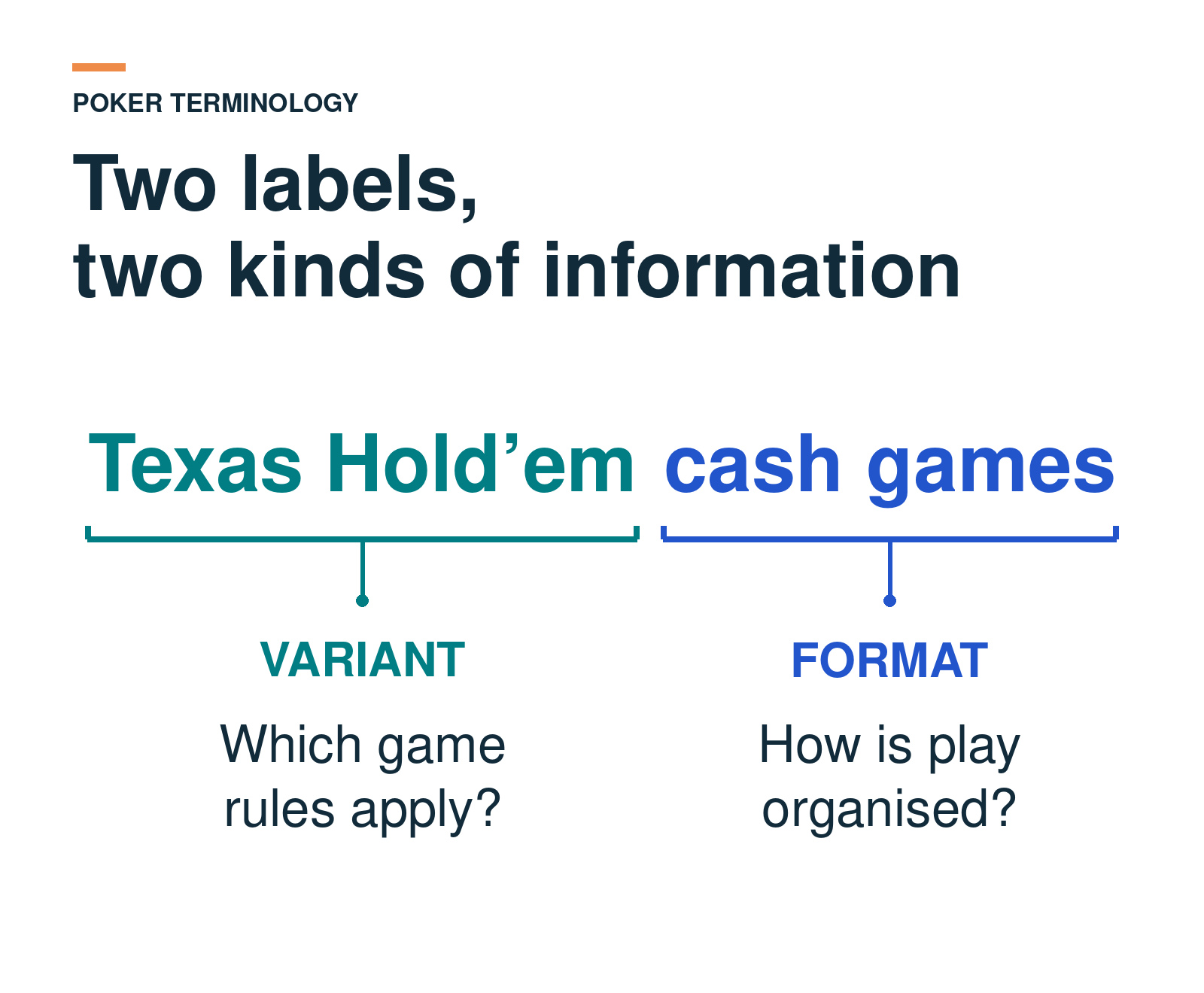
Side-by-side comparisons need the same level of description on both sides. Texas Hold'em and Omaha name variants; cash games and tournaments name playing arrangements. A comparison that changes the kind of label halfway through also changes its subject. Keeping the terms parallel makes the basis of the comparison visible.
A list of variants and formats identifies categories without necessarily specifying which combinations are available to play. Mentioning Omaha and tournaments separately does not establish that a named event uses Omaha. Writers need evidence for the combination they describe, as well as for the individual terms. Category lists should therefore remain separate from statements about specific games or events.
Keep the Terminology Consistent Across a Guide
Once those distinctions are established, consistency carries them through the article. In a Smashing Magazine account of content design practice, Oleksii Tkachenko describes a shared vocabulary built around definitions and approved synonyms. The useful principle for game writing is to give recurring terms a stable meaning across the text.
A working glossary can record the variant names, format labels, and definitions used in a piece. Its purpose is editorial consistency; publishing the glossary is unnecessary when the explanations already introduce each term clearly. It can also distinguish an accepted abbreviation from a different concept, preserving precision without repeating the longest available name in every sentence. Here, Hold'em can remain a shortened reference to Texas Hold'em.
Sentence variety can come from the explanation itself. A paragraph may establish a distinction, develop its consequences, or connect it to information already introduced. Replacing a defined term with a looser synonym simply to avoid repetition changes the reader's reference point. Repeating the precise term is often the cleaner choice.
Shortened references need the same precision. The game and the event point to different subjects, even when they occur in one paragraph. Their meaning should remain attached to the earlier description, so a statement about event organization does not appear to redefine the variant's rules.
A precise label is useful even when a reader sees only a heading or a short extract. The words identify the subject without requiring the surrounding page to supply a missing distinction. A description that names the variant and the playing arrangement can therefore stay brief while preserving its meaning.